

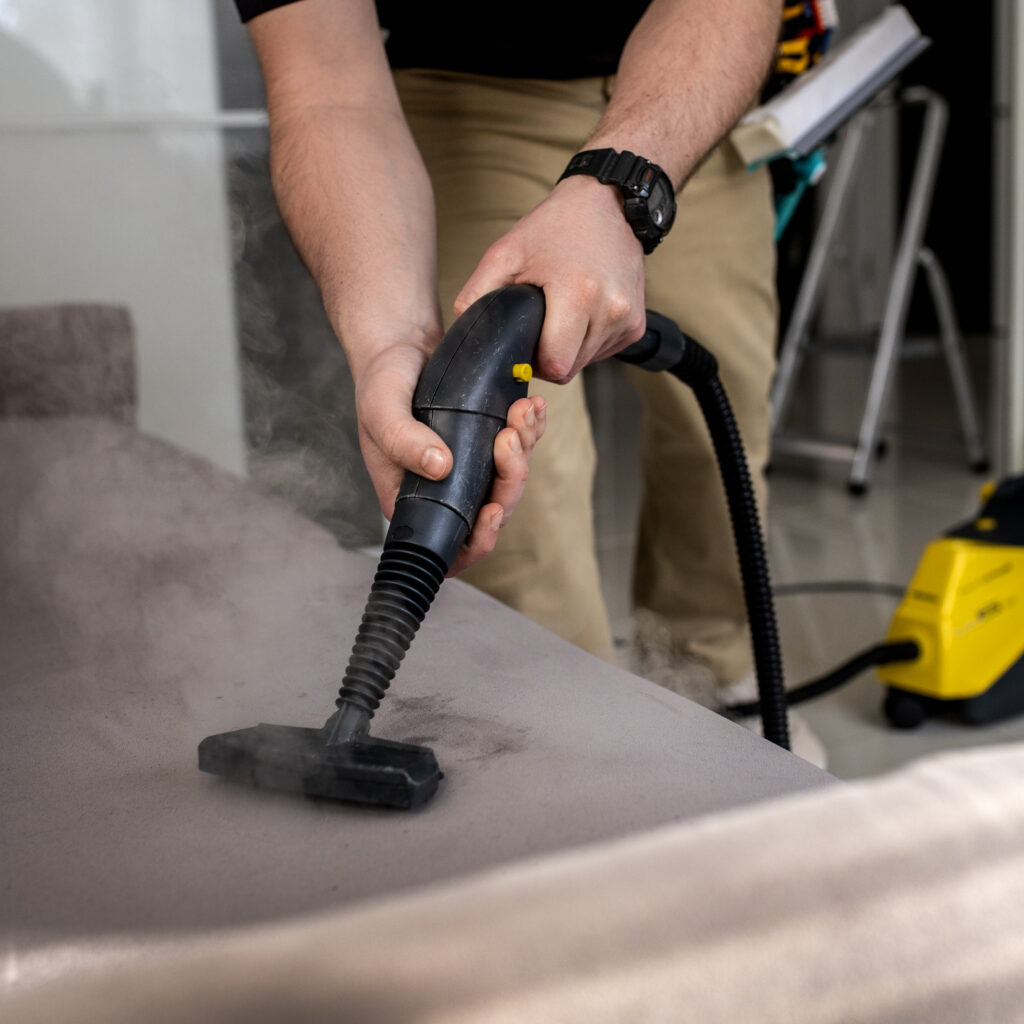
Your furniture might look fine at a glance, but it’s quietly collecting dust, allergens, and bacteria with every snack session and nap.
With a bit of effort and the right technique, you can bring your upholstery back to life and also enjoy cleaner air and long-term savings.
If you’ve been putting it off, this is your sign to dive in. It’s easier than you think and surprisingly satisfying once you start. Here’s what to do.
Assessing the Material
Before you start, take a peek under the cushions or flip that couch to find its care label—it’s your essential guide to safe cleaning. If the tag is missing, check the manufacturer’s website or ring them up.
Different fabrics demand unique handling. Cotton and linen, for example, tolerate water-based mixtures, but velvet needs a gentle touch. Leather, on the other hand, requires specific cleaners to stay smooth.
Microfibre requires alcohol-based cleaners rather than water solutions, as water can leave permanent rings on this synthetic material. For silk upholstery, avoid water entirely and opt for dry cleaning methods or professional cleaning to prevent colour bleeding.
If you’re still uncertain, always dab your blend on an inconspicuous spot first. That patch on the underside of your sofa should work perfectly.
Hold off for a full day to eliminate the risk of unexpected colour shifts or damage before tackling the entire piece. This quick trick will prevent your cream-coloured lounger from becoming an accidental art project!
Choose the Right Sanitising Solution
Selecting an ideal upholstery cleaner shouldn’t be a headache. For daily home maintenance, simple concoctions usually do the job. Just mix one teaspoon of dish soap with warm water, and you won’t need any chemical-heavy cleaners.
You can also try combining equal amounts of acetic acid and water to combat smells and minor blemishes.
You can also use ready-made products, but make sure to examine the labels on your upholstery first to confirm that they suit your particular fabric type.
Interestingly, numerous furniture makers produce specialised solutions for their specific materials. While they cost a bit more, they are worth buying if you want to protect and maintain high-quality or delicate pieces.
Last but not least, if you have allergies, hunt for plant-derived goods or products marked as hypoallergenic.
Not feeling confident? No worries! Just hire professional upholstery cleaning services. They’ll take care of the nitty-gritty details while you kick back and relax.
Prepare the Area
Before you start cleaning, get everything in order. It’ll make the whole process smoother. First, clear off your furniture by removing those throw pillows, blankets, and all the random items that somehow ended up on your sofas.
Snap a quick photo before you pull the cushions off to remember how everything fits together later. It’s a super helpful hack if you’re dealing with those tricky sectional pieces.
Next, grab your vacuum and use a special fabric attachment to thoroughly sweep over everything. We know it’s tempting to rush, but you’ll just force grime deeper into the material if you skip this step.
Always begin at the top and work downward, using slow, overlapping passes instead of quick swipes.
Make sure to pay extra attention to seams, cracks, and where cushions meet the backrest. These spots collect surprising amounts of dust and crumbs. For those fancy button-tufted pieces, switch to a smaller tool to clean those little nooks where gunk hides.
Remember to flip removable cushions and vacuum both sides. Check underneath them, too. That’s where you’ll find lost coins and forgotten snack bits lurking.
To catch drips and protect your floors, lay old towels around your workspace. Lastly, round up all your supplies before you begin. At a minimum, get your cleaning mixture, several fresh microfibre cloths, a gentle brush, and a fan to help speed up drying time.
Now, you can tackle the job without hunting for lost cleaners or tools halfway through.
Apply the Solution
Here comes the main part: applying your cleaner. Remember that less is definitely more. So, lightly dampen your microfibre cloth with the mixture instead of soaking it.
Also, never spray the cleaner directly onto furniture unless the directions specifically tell you to. Too much moisture spells trouble for most fabrics and might cause water spots or mildew.
Generally speaking, you should work methodically in small areas using gentle circular movements.
For stubborn spots, let your solution sit briefly before gently blotting with a fresh, damp cloth. Remember to cover those armrests and headrests since they collect body oils and smudges like magnets.
Avoid scrubbing the fabric, as this can embed the stain further and cause damage. Instead, blot the area several times to lift the stain safely and effectively.
Dry and Maintain Upholstery
Wet fabric creates ideal conditions for mould. To improve the airflow around your items, open the windows when the weather allows or run fans.
Depending on your regional climate and the amount of solution applied, this process might require just several hours or an entire day. So, you have to be patient.
Once the fabric is dry, fluff it with your hands to restore its texture. If your cushions have lost some shape, give them a few solid punches to redistribute the stuffing inside.
Keeping your freshly treated furniture in good shape beats starting the whole process over. We recommend applying a fabric protector, especially on light-coloured pieces or if you have kids and pets.
You can also place washable covers over frequently-used sections, or perhaps implement a ‘no food on the couch’ rule.
Finally, don’t forget to stick to a basic care routine. Dust weekly, treat accidents immediately when they occur, and schedule thorough treatments every 6-12 months.
Conclusion
Congratulations! You’ve rescued your furniture from becoming a biohazard. Now, it’s time to make those magazine-worthy results last. A quick once-over keeps things looking good and stops small messes from becoming permanent features.
Take a few minutes each month to spot-clean and schedule a proper deep treatment every season. This way, your investment will last years longer, saving you hundreds on replacements. Plus, you’ll never feel embarrassed when friends drop by unexpectedly.